
Security Operations Center (SOC)
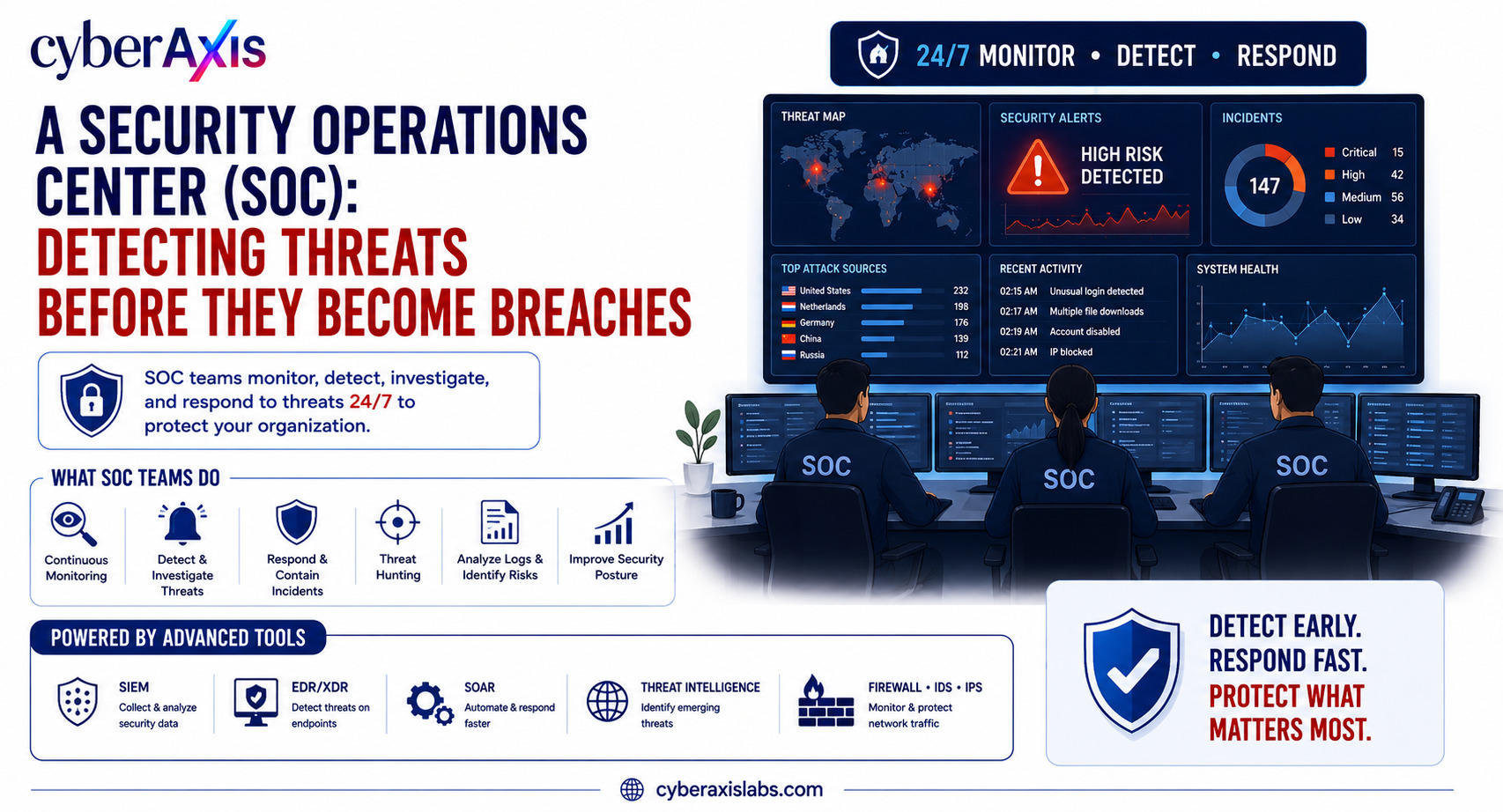
Cyberattacks don't only happen during business hours.
Attackers can strike at any time—day or night. That's why organizations need continuous monitoring to detect and respond to threats before they turn into major security incidents.
This is where a Security Operations Center (SOC) plays a critical role.
A SOC is more than just a room filled with security analysts watching dashboards. It's the central hub where people, processes, and technology work together to continuously monitor, detect, investigate, and respond to cybersecurity threats.
What Is a Security Operations Center (SOC)?
A Security Operations Center (SOC) is a dedicated team responsible for protecting an organization's IT environment 24/7.
SOC analysts continuously monitor security events from networks, endpoints, servers, cloud environments, applications, and user accounts. Their responsibility is to detect suspicious activity, investigate alerts, contain threats, and minimize the impact of cyberattacks before they escalate into major security incidents.
Simply put, a SOC helps organizations answer one important question:
"Is someone trying to attack our environment right now?"
What Does a SOC Team Do?
A modern SOC performs several critical functions, including:
Monitor networks, endpoints, cloud environments, and applications 24/7.
Detect suspicious activities and indicators of compromise (IOCs).
Investigate security alerts generated by SIEM, EDR/XDR, IDS/IPS, and other security tools.
Respond to security incidents and contain attacks.
Perform proactive threat hunting to uncover hidden attackers.
Analyze logs from multiple systems to identify unusual behavior.
Prioritize vulnerabilities based on business risk.
Coordinate with IT teams during incident response.
Continuously improve security controls based on lessons learned.
Rather than waiting for users to report problems, SOC teams proactively search for threats before they cause damage.
Technologies Used by a SOC
SOC analysts rely on several security technologies, including:
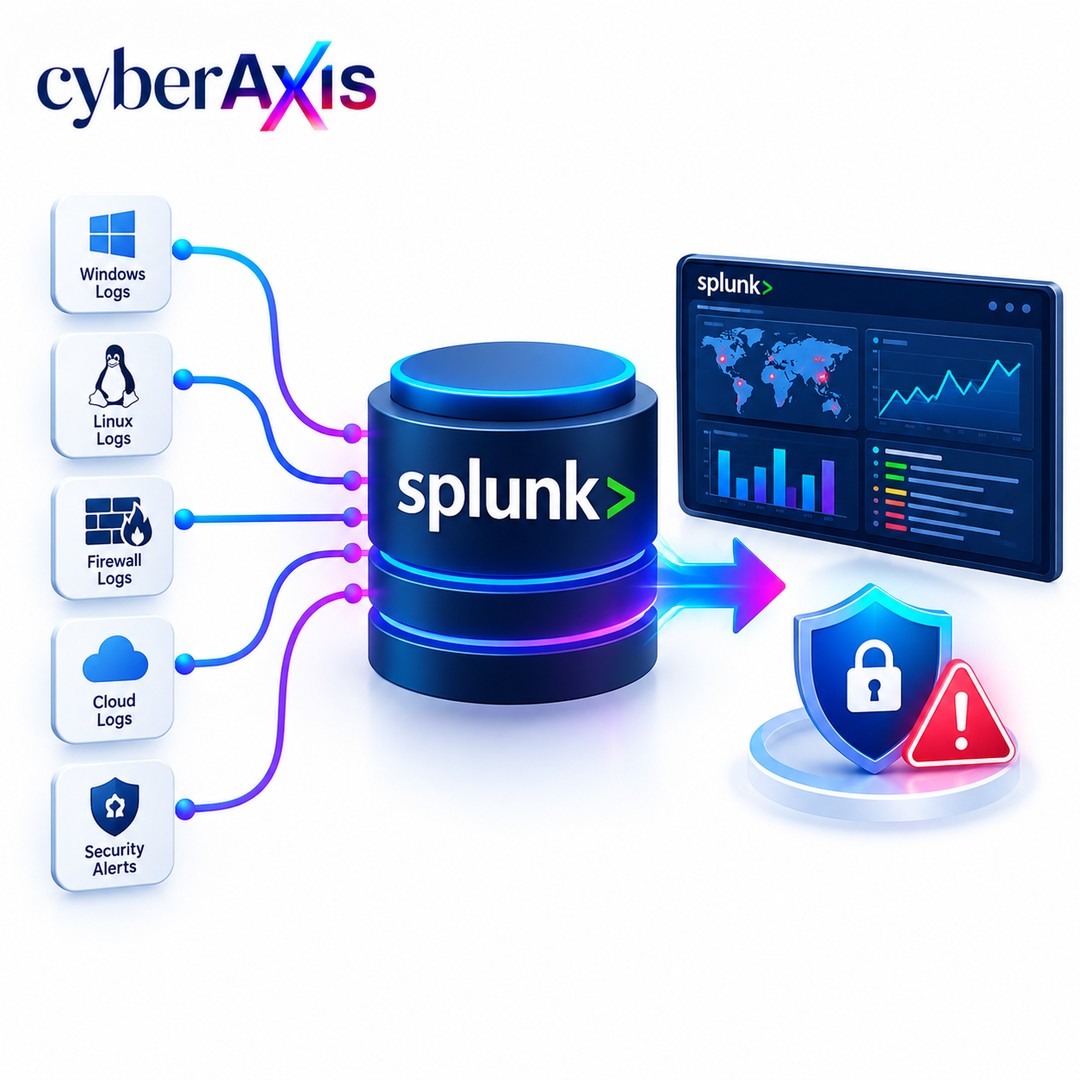
SIEM (Security Information and Event Management) for collecting, correlating, and analyzing logs.
EDR/XDR (Endpoint Detection and Response) for monitoring endpoints and detecting malicious behavior.
SOAR (Security Orchestration, Automation, and Response) to automate repetitive investigation and response tasks.
Threat Intelligence Platforms to identify known malicious IPs, domains, and indicators of compromise.
Firewalls, IDS, IPS, and Web Application Firewalls (WAFs) to monitor and protect network and application traffic.
These technologies provide visibility, but it's the SOC analysts who investigate the alerts, determine the risk, and take appropriate action.
Realistic Example 1 – Insider Data Theft
An employee who recently submitted their resignation suddenly begins downloading thousands of confidential files outside normal business hours.
The downloads include customer records, financial reports, contracts, and internal business documents.
This unusual behavior triggers an alert because it significantly differs from the employee's normal activity.
The SOC analyst investigates the event, confirms the abnormal behavior, temporarily suspends the account, and notifies management before sensitive information can leave the organization.
Lesson: A SOC doesn't only protect against external attackers—it also detects suspicious insider activity that could lead to data loss.
Realistic Example 2 – Command and Control (C2) Communication
An employee unknowingly installs malware after downloading a fake software update.
Instead of immediately encrypting files or displaying obvious signs of compromise, the malware quietly communicates with an external Command-and-Control (C2) server every few minutes, waiting for instructions from the attacker.
The organization's EDR detects the unusual outbound communication and generates a high-severity alert.
The SOC analyst isolates the infected device, blocks communication with the malicious server, removes the malware, and investigates whether any other systems were affected.
The attack is contained before the attacker gains full control of the environment.
Lesson: Detecting suspicious behavior early can stop an attack long before it turns into ransomware or a major data breach.
Realistic Example 3 – Web Application Attack
A company's public-facing customer portal suddenly begins receiving thousands of unusual requests targeting its login page.
The requests contain SQL Injection payloads and other attempts to exploit known web application vulnerabilities.
The Web Application Firewall (WAF) blocks many of the malicious requests while simultaneously sending alerts to the organization's SIEM.
The SOC team investigates the activity, identifies the attack source, blocks the malicious IP addresses, reviews application logs for signs of compromise, and works with the development team to remediate the vulnerable code before customer data is exposed.
Lesson: A SOC doesn't just respond to attacks—it collaborates with other teams to strengthen security and prevent future incidents.
Why Every Organization Needs a SOC
Without continuous monitoring, attackers may remain undetected for days, weeks, or even months.
A SOC helps organizations:
Detect threats before they become security breaches.
Respond to incidents quickly and effectively.
Reduce the impact of ransomware and malware attacks.
Protect sensitive customer and business information.
Improve regulatory compliance.
Minimize downtime and financial losses.
Strengthen the organization's overall cybersecurity posture.
Cybersecurity isn't just about preventing attacks.
It's about detecting, investigating, and responding when prevention isn't enough.
Final Thoughts
No organization can guarantee that attackers will never gain access to its environment.
What matters is how quickly suspicious activity is detected, investigated, and contained.
A Security Operations Center provides the visibility, expertise, and rapid response needed to stop threats before they become costly security incidents.
Whether it's detecting insider threats, identifying malware communicating with a Command-and-Control server, or stopping attacks against a web application, a SOC plays a vital role in protecting modern organizations.
Remember: It's not enough to build strong defenses. You also need a team that's constantly watching for the threats that try to bypass them.
Comments 0
Email-verified comments are reviewed before they are published.