
Zero-Day Exploits Explained
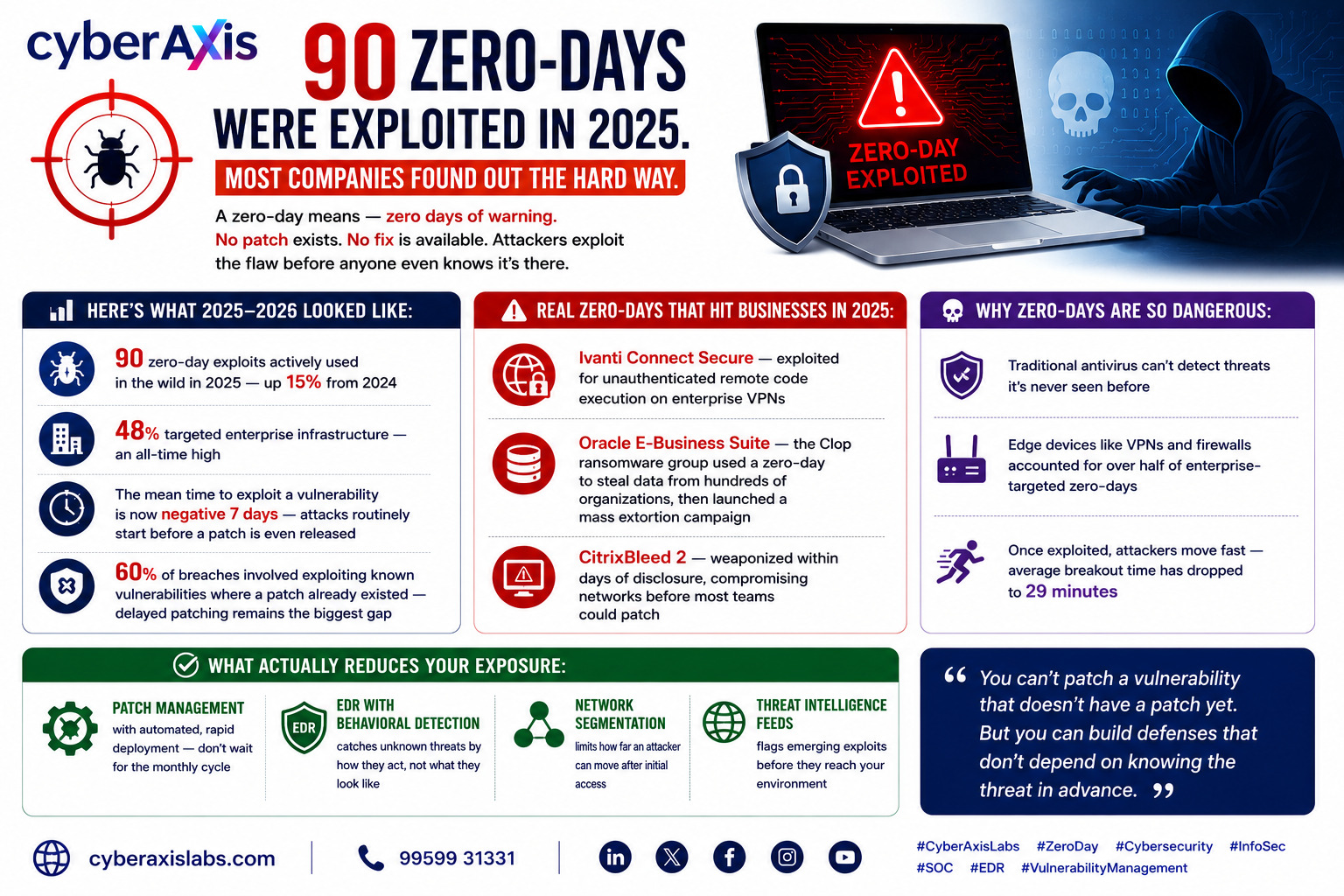
90 Zero-Days Were Exploited in 2025. Most Companies Found Out the Hard Way.
A zero-day means — zero days of warning, No patch exists. No fix is available. Attackers exploit the flaw before anyone even knows it's there.
Here's what 2025-2026 looked like:
→ Google tracked 90 zero-day exploits actively used in the wild in 2025 — up 15% from 2024
→ 48% targeted enterprise infrastructure — an all-time high
→ The mean time to exploit a vulnerability is now negative 7 days — attacks routinely start before a patch is even released
→ 60% of breaches involved exploiting known vulnerabilities where a patch already existed — delayed patching remains the biggest gap
Real zero-days that hit businesses in 2025:
Ivanti Connect Secure — exploited for unauthenticated remote code execution on enterprise VPNs
Oracle E-Business Suite — the Clop ransomware group used a zero-day to steal data from hundreds of organizations, then launched a mass extortion campaign
CitrixBleed 2 — weaponized within days of disclosure, compromising networks before most teams could patch
Why zero-days are so dangerous:
- Traditional antivirus can't detect threats it's never seen before
- Edge devices like VPNs and firewalls accounted for over half of enterprise-targeted zero-days
- Once exploited, attackers move fast — average breakout time has dropped to 29 minutes
What actually reduces your exposure:
→ Patch management with automated, rapid deployment — don't wait for the monthly cycle
→ EDR with behavioral detection — catches unknown threats by how they act, not what they look like
→ Network segmentation — limits how far an attacker can move after initial access
→ Threat intelligence feeds — flags emerging exploits before they reach your environment
You can't patch a vulnerability that doesn't have a patch yet. But you can build defenses that don't depend on knowing the threat in advance.
cyberaxislabs.com
#CyberAxisLabs #ZeroDay #Cybersecurity #InfoSec #SOC #EDR #VulnerabilityManagement
We appreciate your feedback - share your comments at [email protected]



Comments 0
Email-verified comments are reviewed before they are published.