
Phishing: #1 Threat
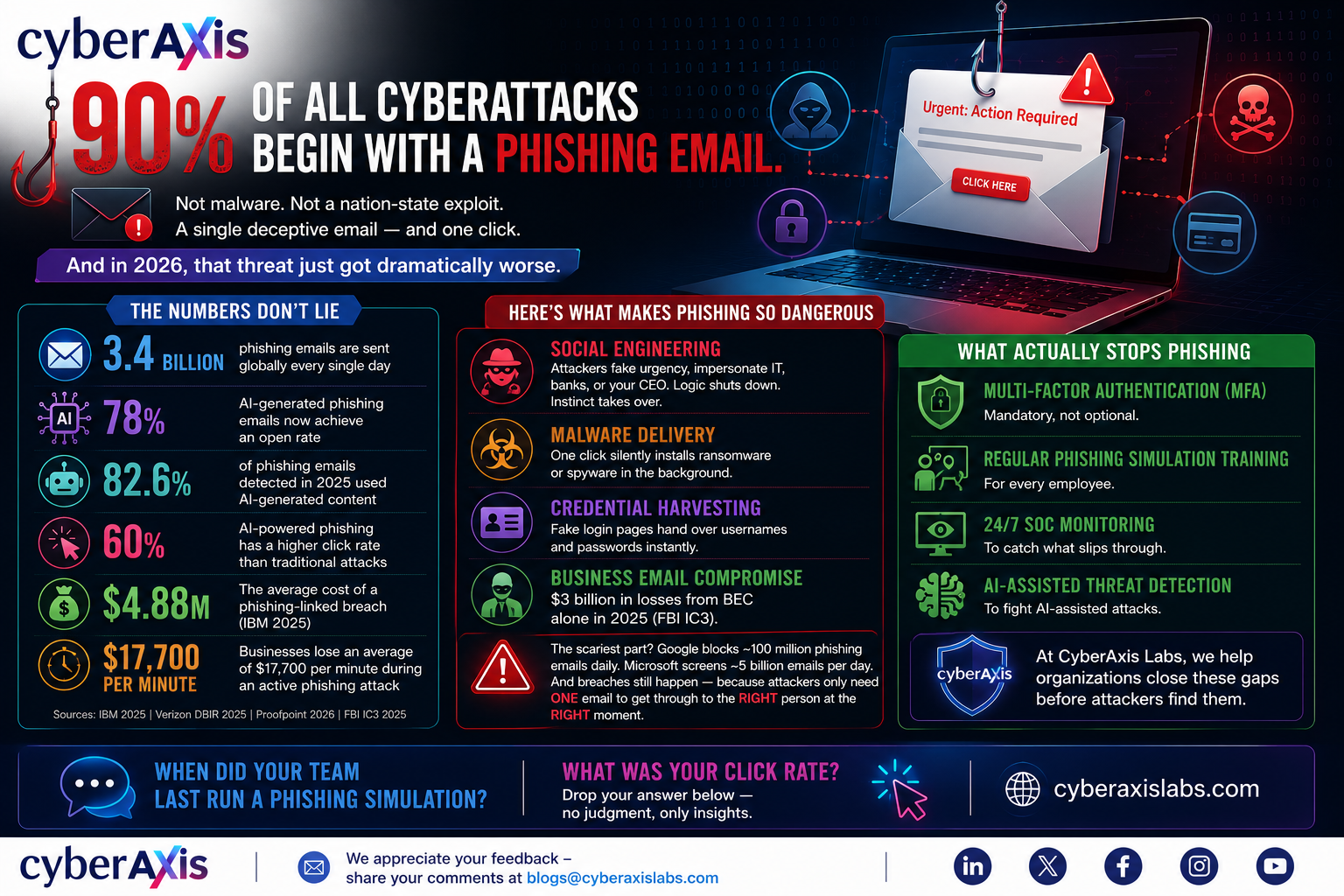
90% of all cyberattacks begin with a phishing email.
Not malware. Not a nation-state exploit.
A single deceptive email — and one click.
And in 2026, that threat just got dramatically worse.
The numbers don't lie:
→ 3.4 billion phishing emails are sent globally every single day
→ AI-generated phishing emails now achieve a 78% open rate
→ 82.6% of phishing emails detected in 2025 used AI-generated content
→ AI-powered phishing has a 60% higher click rate than traditional attacks
→ The average cost of a phishing-linked breach? $4.88M per incident (IBM 2025)
→ Businesses lose an average of $17,700 per minute during an active phishing attack
Here's what makes phishing so dangerous:
Social Engineering — Attackers fake urgency, impersonate IT, banks, or your CEO. Logic shuts down. Instinct takes over.
Malware Delivery — One click silently installs ransomware or spyware in the background
Credential Harvesting — Fake login pages hand over usernames and passwords instantly
Business Email Compromise — $3 billion in losses from BEC alone in 2025 (FBI IC3)
The scariest part?
Google blocks ~100 million phishing emails daily.
Microsoft screens ~5 billion emails per day.
And breaches still happen — because attackers only need ONE email to get through to the RIGHT person at the RIGHT moment.
What actually stops phishing:
→ Multi-Factor Authentication (MFA) — mandatory, not optional
→ Regular phishing simulation training for every employee
→ 24/7 SOC monitoring to catch what slips through
→ AI-assisted threat detection to fight AI-assisted attacks
At CyberAxis Labs, we help organizations close these gaps before attackers find them.
When did your team last run a phishing simulation? What was your click rate?
Drop your answer below — no judgment, only insights.
cyberaxislabs.com
#CyberAxisLabs #Cybersecurity #Phishing #InfoSec #SOC #MFA #AIThreats #CyberAwareness #DataBreach #SMBSecurity
We appreciate your feedback - share your comments at [email protected]


Comments 0
Email-verified comments are reviewed before they are published.