
VPN: Hidden Risk
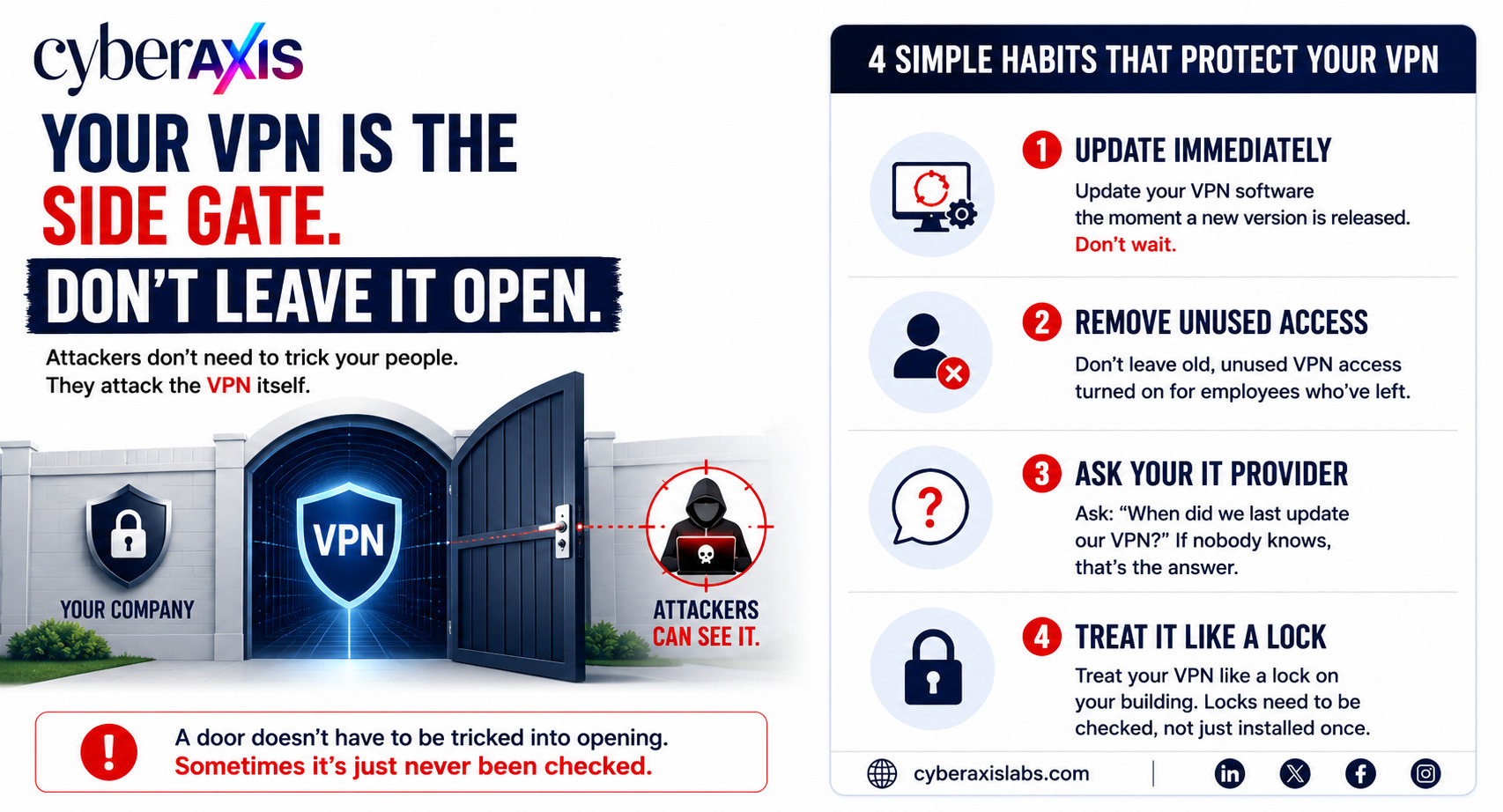
You Locked the Front Door. You Left the Side Gate Wide Open.
Your company uses a VPN. Employees log in from home, from coffee shops, from airports. Everyone assumes it's the "secure" way in.
Nobody checks on it. It just... sits there. Working. Quiet. Trusted.
Here's the part most people don't know: that same VPN is often the easiest way for an attacker to get into a company — not by tricking an employee, but by attacking the VPN itself.
WHY THIS HAPPENS: A VPN is like a private tunnel into your office. But the tunnel has a door on the outside, facing the whole internet, so employees can reach it from anywhere. That also means anyone else on the internet can see that door too. If the software running that door has a flaw and it often does attackers can walk straight through it. No password needed. No employee has to click anything or make a mistake.
WHY IT WORKS SO WELL: Most people think of "getting hacked" as clicking a bad link or falling for a scam email. This is different. It skips people completely and goes straight for the technology everyone assumes is safe because it has the word "secure" in the name. That's exactly why it stays undetected for so long. Nobody's watching the door because nobody thinks the door is the problem.
SIMPLE HABITS THAT ACTUALLY HELP: Update your VPN software the moment a new version is released, don't wait Don't leave old, unused VPN access turned on for employees who've left Ask your IT provider: "When did we last update our VPN?" If nobody knows, that's the answer Treat your VPN like a lock on your building. Locks need to be checked, not just installed once
A door doesn't have to be tricked into opening. Sometimes it's just never been checked.
cyberaxislabs.com
#Cybersecurity #SmallBusiness #VPN #DataProtection #CyberAwareness #ITSecurity


Comments 0
Email-verified comments are reviewed before they are published.