
Endpoint Security Explained
Endpoint Security: Protecting Every Device, Every Connection
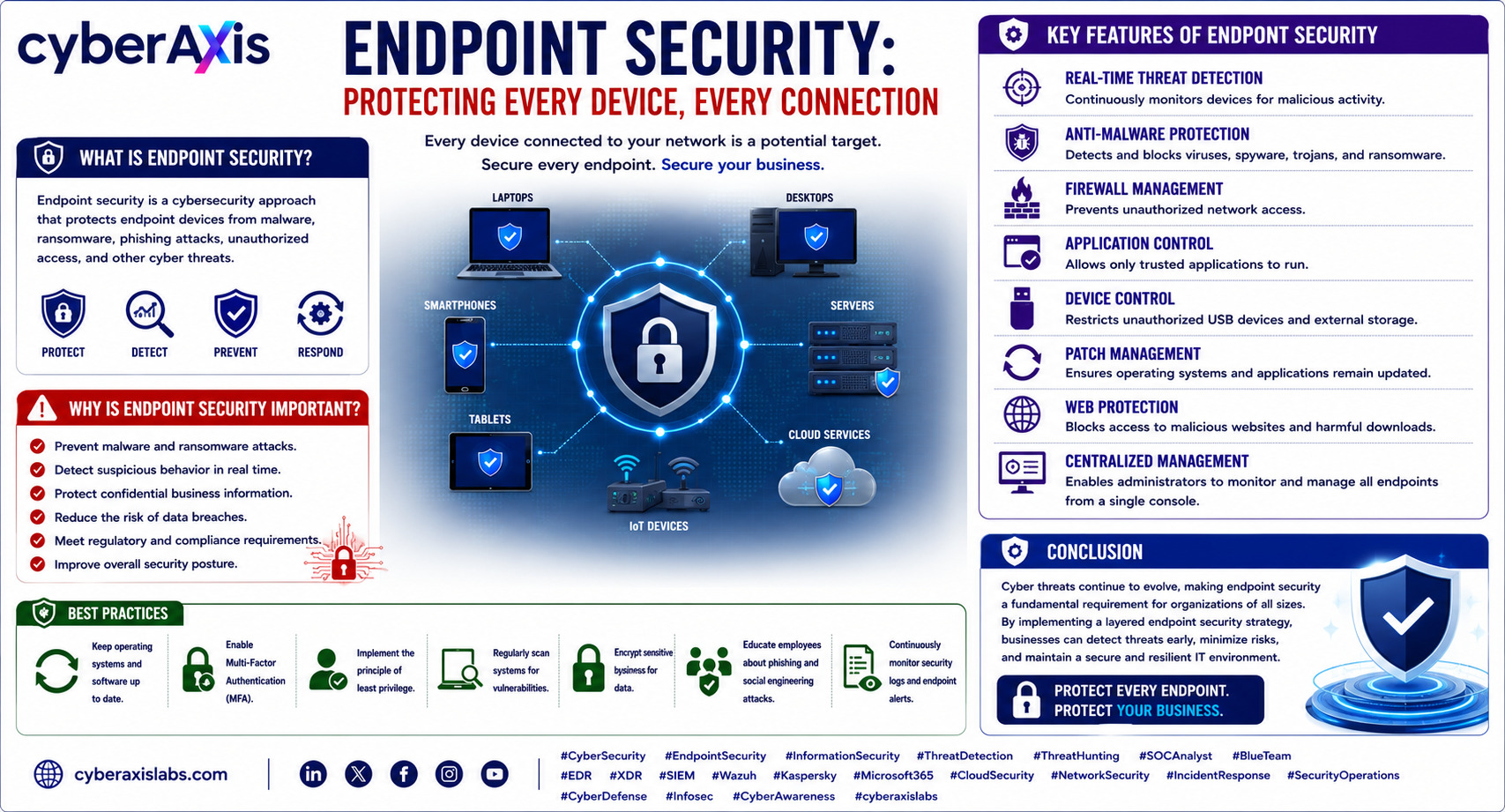
In today's digital landscape, every laptop, desktop, smartphone, server, and IoT device connected to an organization's network represents a potential entry point for cyber attackers. As businesses embrace remote work, cloud services, and mobile technologies, securing these endpoints has become one of the most critical aspects of cybersecurity.
What is Endpoint Security?
Endpoint security is a cybersecurity approach that protects endpoint devices from malware, ransomware, phishing attacks, unauthorized access, and other cyber threats. It combines multiple security technologies to monitor, detect, prevent, and respond to suspicious activities across all connected devices.
Why is Endpoint Security Important?
A single compromised endpoint can allow attackers to gain access to an organization's network, steal sensitive data, deploy ransomware, or disrupt business operations. Effective endpoint security helps organizations:
- Prevent malware and ransomware attacks.
- Detect suspicious behavior in real time.
- Protect confidential business information.
- Reduce the risk of data breache
- Meet regulatory and compliance requirements.
- Improve overall security posture.
Key Features of Endpoint Security
- Real-time Threat Detection: Continuously monitors devices for malicious activity.
- Anti-Malware Protection: Detects and blocks viruses, spyware, trojans, and ransomware.
- Firewall Management: Prevents unauthorized network access.
- Application Control: Allows only trusted applications to run.
- Device Control: Restricts unauthorized USB devices and external storage.
- Patch Management: Ensures operating systems and applications remain updated.
- Web Protection: Blocks access to malicious websites and harmful downloads.
- Centralized Management: Enables administrators to monitor and manage all endpoints from a single console.
Best Practices
- Keep operating systems and software up to date.
- Enable Multi-Factor Authentication (MFA).
- Implement the principle of least privilege.
- Regularly scan systems for vulnerabilities.
- Encrypt sensitive business data.
- Educate employees about phishing and social engineering attacks.
- Continuously monitor security logs and endpoint alerts.
Conclusion
Cyber threats continue to evolve, making endpoint security a fundamental requirement for organizations of all sizes. By implementing a layered endpoint security strategy, businesses can detect threats early, minimize risks, and maintain a secure and resilient IT environment.
Protect every endpoint. Protect your business.
#CyberSecurity #EndpointSecurity #InformationSecurity #ThreatDetection #ThreatHunting #SOCAnalyst #BlueTeam #EDR #XDR #SIEM #Wazuh #Kaspersky #Microsoft365 #CloudSecurity #NetworkSecurity #IncidentResponse #SecurityOperations #CyberDefense #Infosec #CyberAwareness #cyberaxislabs
We appreciate your feedback - share your comments at [email protected]
Comments 0
Email-verified comments are reviewed before they are published.